Beyond Interpretation: Navigating Dreams Through Symbol, Body, and Creative Process
Dreams are often considered mysterious nighttime stories, but they can be a doorway into so much more. If we consider them from a therapeutic perspective - they can also be seen as important gateways into our emotions and memories and even tap into our deeper somatic experience and inner wisdom. They are also a necessary part of our sleep cycle, occurring during deep REM sleep. Indeed, “REM or ‘rapid eye movement’ sleep (where most of our vivid dreams take place) has also been linked to various mental and physiological functions including learning and memory consolidation (Moffit, 1993; Stickgold, 2005, cited Hoss, R.J., 2010, p.1).
As an arts therapist, I sometimes wonder if people assume that I either interpret dreams, or work with them purely in a symbolic manner. But dreams are also embodied experiences, and at times can even carry spiritual significance for a client. As clinicians, if we can create a safe, supportive space for clients to explore dream content, we also allow the space to process their unconscious material, regulate their nervous systems and reclaim a certain level of agency over their healing journey.
From a clinical perspective, approaching dreams with a structured, holistic, and trauma informed framework- dream content or experience can become a powerful access point for people to learn more about themselves. Within my practice, I combine trauma-informed care, somatic practices, phenomenology, and transpersonal perspectives in all my work. I adopt a similar approach when I help guide clients through their dreams – as well as incoporating multimodal arts practice as a distinct, and very important part of the dreamwork process.
I have written this blog in part to help demystify the field of dreamwork, particularly within Arts Therapy practice and how we incorporate these approaches along with expressive therapies, to help our clients engage with their dreams in an embodied and empowering way.
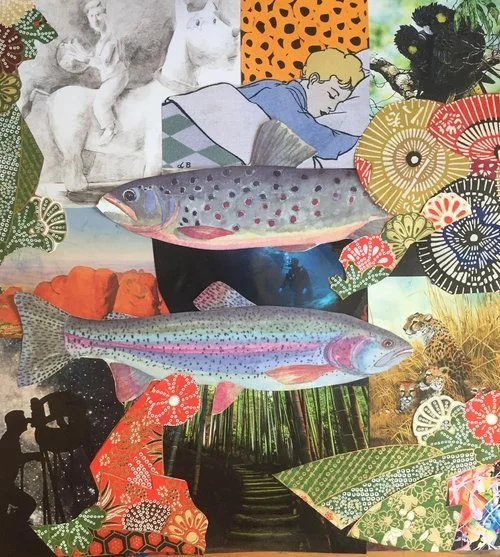
Engaging with our dreams through a phenomenological lens: Exploring Lived Experience
At its heart, phenomenology, is the study of how we experience the world through our own perceptions. Working with the lived experience of our dreams and how we engage with them on both a personal and embodied level can play a critical role in our understanding of them. It is about how a dream is experienced by the dreamer in their body, their emotions and their awareness- and not just about interpreting symbols and making meaning.
In dreamwork, we can ‘enter the dream’ by focusing on its somatic and sensory experiences. For example, if a client were to tell me that they dreamt of a cat, not only would we potentially explore the narrative of this dream and the visual (and other sensory) aspects to it, but I would also encourage them to tap into the physical sensations that they may feel arise in their body at different points of the dream- or even when the cat first came into view.
What is their somatic response or embodied sense of the cat? How do other aspects of the dream feel? By engaging with these somatic sensations, the client can explore the deeper emotional and psychological meaning the dream may hold. This can help move the client from a more symbolic interpretation of their dream to a felt experience.
By doing this the work becomes embodied and immediate and can provide a rich place from which we can then potentially move into multi-modal arts inquiry. It allows clients to interact with the dream in real time, and experience it as something tangible in a more physical and embodied way.
Further, if a client say for example experiences a dream of flying but also felt an overwhelming sense of fear- we may explore how this fear manifested for them physically, eg. do they feel tightness in the chest or experience shallow breathing. By honing in on these somatic cues, the client can become more aware of how the unconscious material in the dream may be stored in their body, and we can explore ways to release and process that energy safely.
In the field of somatic dreamwork, this method is often referred to as ‘dream re-entry’ (rooted in Jung’s Active Imagination). This process effectively invites the client to revisit the dream through sensory exploration, allowing them to re-experience the feeling of the dream with their body and mind.
Further, Art therapy modalities such as movement, drawing, or sculpting can also allow clients to further explore their dream, bringing a greater sense of embodiment into the therapeutic process. This somatic, client-centered process aligns with experiential dreamwork models that privilege a client's own bodily "felt shift" over a therapist's rigid interpretation (Ellis, 2023) This embodied re-engagement helps clients integrate and ground the emotional and somatic experiences, rather than leaving them abstract or unresolved.
From here, we can work with movement, imagery, and sound in a phenomenological way- helping the client to deepen their phenomenological experiencing of both the dream as well as any new insights that may arise from the artmaking- in the here and now.
By approaching dreamwork from a phenomenological and embodied approach we can focus on how the dream affects the client in the present moment. This moves beyond just understanding the dream in the context of past experiences and symbolic attribution, but also how it may resonate in the body and mind right now.
In this respect, exploring the lived experience of the dream in the present tense can allow for deeper insight into the unconscious material that the dream may be bringing to the surface.
Transpersonal Dreamwork: Tapping into Deeper Wisdom
While approaching dreamwork through a phenomenological and somatic lens can be a great way for clients to address the personal experience of their dream, introducing or allowing a transpersonal perspective can also provide an important space for further exploration.
From a transpersonal perspective, dreams allow us to access deep levels of the psyche or ‘soul’. A reflection given to me by a teacher many years ago really struck me and though not entirely in their words this was the essence:
“Perhaps in this our consciousness could be likened to an ocean scape, and dreaming allows us (like a scuba diver) to dive deeper into the subconscious and unconscious- a beautiful multi-faceted ecosystem existing just under the surface of our conscious, ready to be discovered.”
In a therapeutic sense, working with the symbolic content and narrative of a dream, can allow a client to work at a deep ‘soul’ level. It has been found that “clients report experiencing greater depth in therapy sessions that address dreams compared to routine sessions, and outcome indices appear to be higher for treatment with dream work than without” (Rochlen & Hill, 2005, cited Thomas, 2010, p.3).
In my own practice, I have often found dreamwork sessions are deply insightful for clients. Historically, a transpersonal approach to dream work has been heavily influenced by a Jungian perspective, in that the aim is to help the client re-balance their psyche and heal inner conflict.
However, many practitioners trained in the transpersonal paradigm (myself included) also ensure that therapeutically they ensure that dreamwork remains humanistic and client-centered. As dreams are highly personal (and often uncensored), there should be a solid foundation of trust established within the client-therapist relationship.
The art therapist does not aim to interpret or analyze the dream of a client. Instead through a variety of possible art therapy techniques and ‘active listening’, the client is invited to explore the potentialities and derive their own personal meaning from their dream.
By engaging in images in our dream work and by extending it through creating art forms, we also begin to heal parts of ourselves. According to Jungian theory, art and image acts as an expression of the unconscious and art acts as a bridge allowing for this expression into the external world. By expressing dream work through artistic process this expression can be heightened. A person is able to express imagery and emotive content from the unconscious realm that they may not otherwise easily have access to. This can help a client express emotion and in turn helps re-align the psyche.
From a phenomenological perspective, a symbol is experienced subjectively, and the meanings a client attributes to it are deeply personal. To expand this exploration, we can also incorporate a transpersonal perspective - considering the more universal and archetypal dimensions that may emerge within a dream.
One way to consider Archetypes is to consider them energetically as a way to connect individuals to shared patterns and collective wisdom. This can provide access to insights that lie beyond the personal level, and can open us to new potential perspectives.
For example, the symbol of a ‘heart’ often carries a broadly recognized meaning of love. By working with archetypal amplifications (through myths, fairy tales & folklore, literature, historical, or religious references etc…) we can help link the dreamer to what Jung described as the collective unconscious (Pesant & Zadra, 2004, p. 493).
As a creative arts therapy practitioner, I find it can be very useful for clients to explore the archetypal imagery of their dreams. Imagine a dream where there is a a child which archetypally perhaps represents the vulnerable self (or inner child). Here, we could encourage the dreamer to consider with curiosity the needs or aspects of themselves that require attention and care.
And lets say in this dream there is also a guardian figure present- which shows itself as a protective friend, animal, or presence that offers guidance and support. These archetypal energies are not just personal symbols but also connect us to the collective unconscious (Jung, 1964), and can offer ways for us to deepen our understanding of self and also provide opportunities for healing.
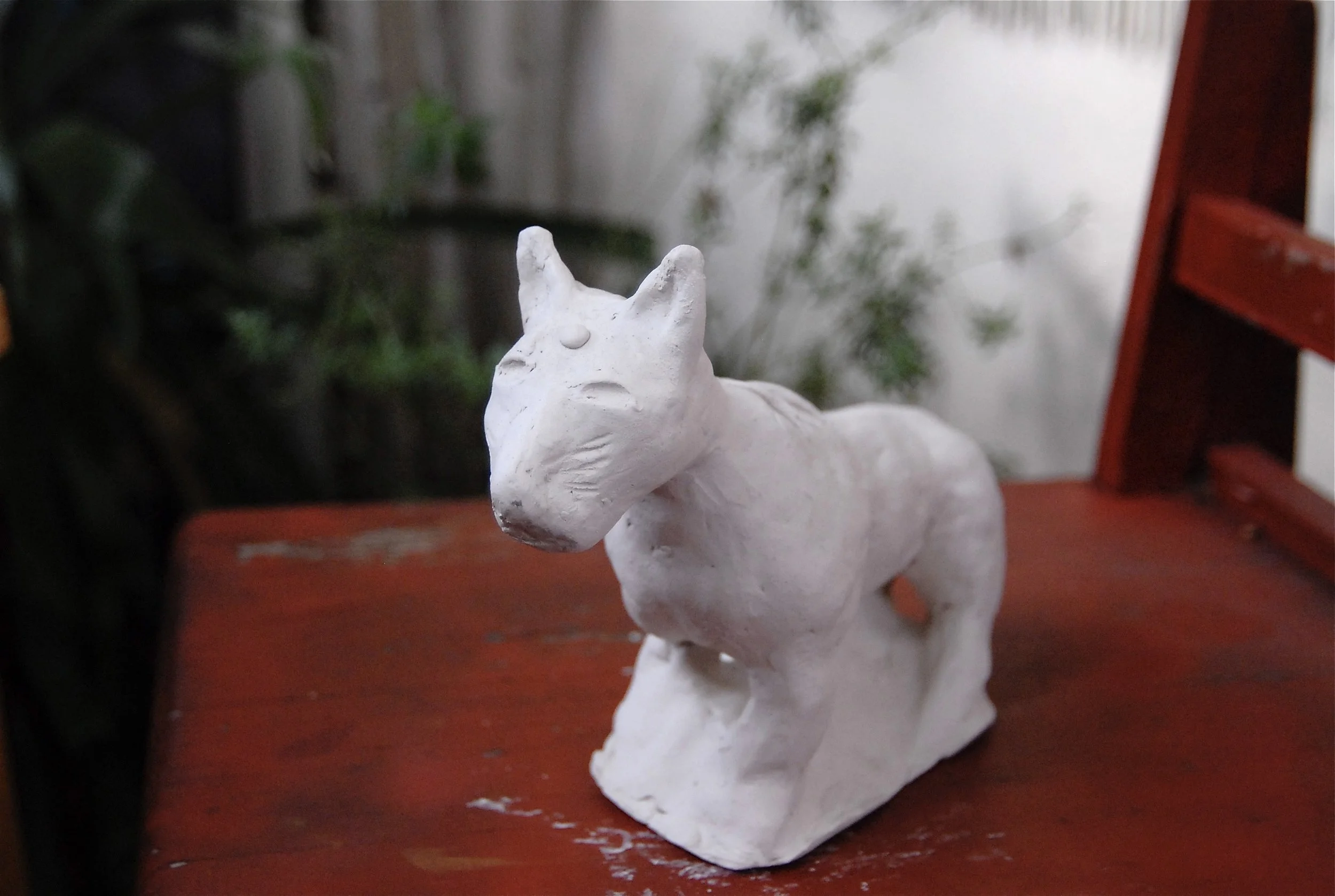
When clients engage with these figures, they are often able to access deeper levels of self-awareness and move through transformational shifts. By engaging with archetypal figures or even objects or symbols through somatic practice (e.g., imagining what it would feel like to be the ‘guardian’ figure for example) and then to us artistic inquiry such as clay sculpting – a client can create a physical representation of the ‘guardian’ figure which opens ip a whole new way of engaging and integrating potential meaning into their conscious awareness.
Dreams and Exploration through Creative Arts Inquiry
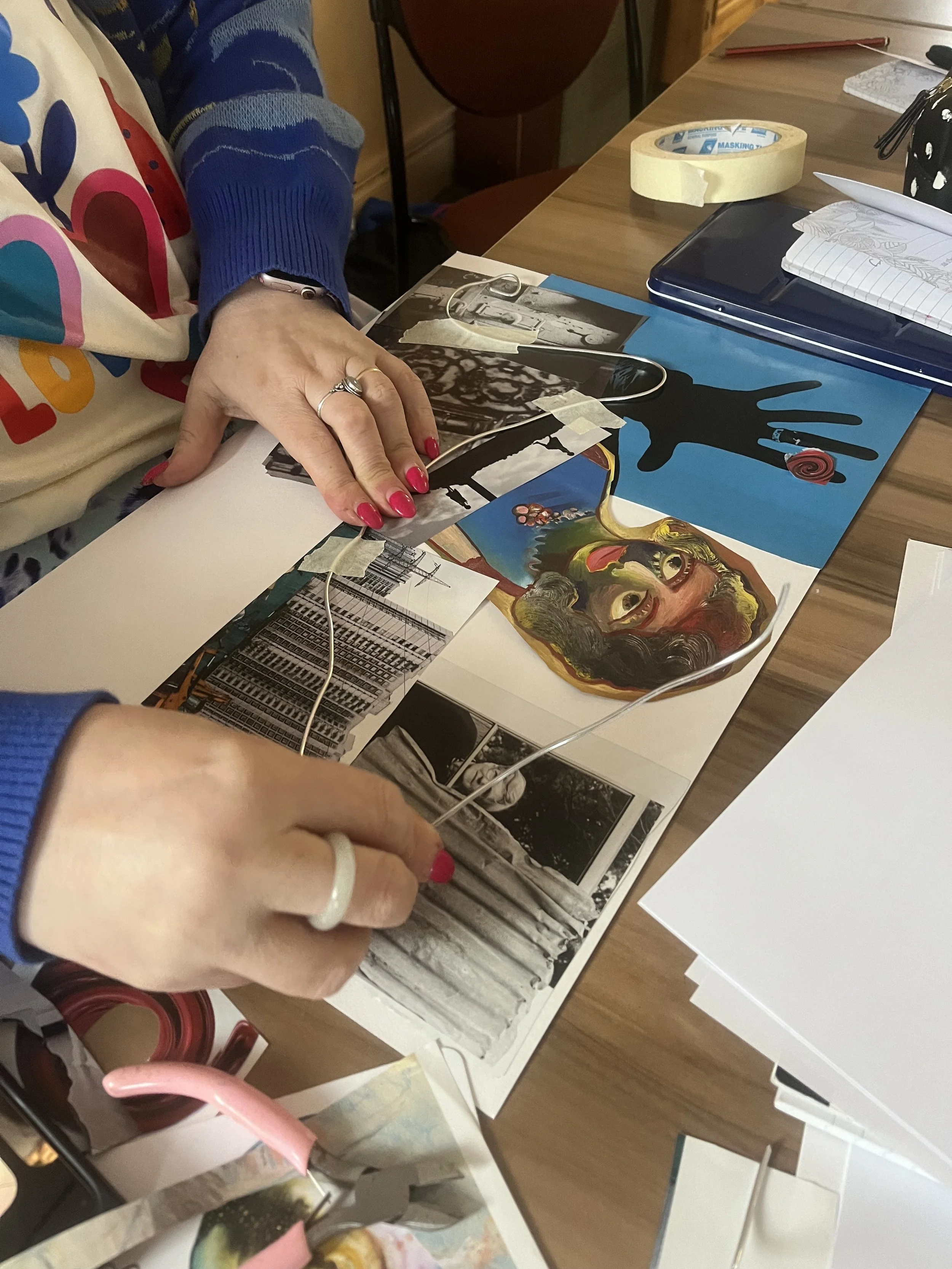
Multi modal artmaking and movement can allow for dream imagery (and narrative) to be expressed in a way that allows them to deeply engage in personal material beyond the constraints of language, interpretation, or aesthetic expectation. By focusing on the creative process rather than producing an outcome, artmaking can become a mode of inquiry; a way of ‘meeting’ the dream as it is felt and lived.
Dreams themselves can perhaps also be understood as forms of artwork themselves, when we consider they can have colour, texture, shape, as well as have auditory or sensory inputs. Research into multi-sensory dream retrieval protocols supports this, demonstrating that actively engaging bodily senses significantly strengthens memory processing and integration (Holzinger et al., 2021). When we encourage aspects of a dream to be brought into material form, they can often shift from an internal (and perhaps fleeting experience) into something that is more tangible- something that can be seen, felt, and perhaps more related to in the physical realm.
Through bringing a dream into material form, a fleeting internal experience can shift into the physical realm. For example:
Somatic tracking: Mapping physical cues like chest or jaw tightness or shallow breathing
Sensory re-entry: Revisiting the emotional atmosphere or sensory qualities of the dream in real-time
Concrete externalisation: Materialising dream figures, archetypal imagery, or emotional content using 2D and 3D creative materials
Multi-modal exploration: Translating dream imagery, sensations, or emotions into movement, sound, gesture, or visual expression
This externalisation allows the client to move into a more concrete relationship with the dream. For example, within my practice, I may choose to invite the ‘dreamer’ to select a particular moment (or even landscape from their dream) and then invite them to explore it further through drawing, painting, or sculptural processes.
This is not necessarily about recreating the dream accurately, but about responding to its felt sense-its textures, movement, emotional tone, or energetic quality. Through this process, the client has a much greater opportunity to engage with the dream across multiple layers of experience, not only from a more cognitive/interpretive lens, but also somatically and emotionally.
Working across modalities can deepen this engagement. As we translate the image or moment into movement, sound, or gesture, we allow the client to experience the dream dynamically rather than statically. In this way, the dream becomes something that is not only remembered, but re-experienced and explored through the body.
We can also integrate dialogical processes into this work. For example, we may invite the dreamer/client to engage in dialogue with a particular aspect of the dream. This may be through verbal expression, written reflection, or imaginative processes such as active imagination.
This can allow different parts of the self to come into relationship, potentially bringing forward perspectives or insights that may not be immediately accessible through direct reflection alone.
From an arts therapy perspective, this integration of image, body, and relational process allows dreamwork to move beyond interpretation and into direct experience.
Instead of asking “what does this dream mean?”, we effectively shift the question towards “what is this dream doing, feeling, or asking in this moment?”
As Natalie Rogers (2001) suggests, “all art that comes from an emotional depth provides a process of self-discovery and insight” and “we express inner feelings by creating outer forms” (p. 163). In this sense, engaging with dreams through creative process can support not only expression, but also integration—allowing clients to access inner resources, process emotional material, and respond to change in ways that are embodied, meaningful, and self-directed.
Trauma-Informed Dreamwork: Creating a Safe Container
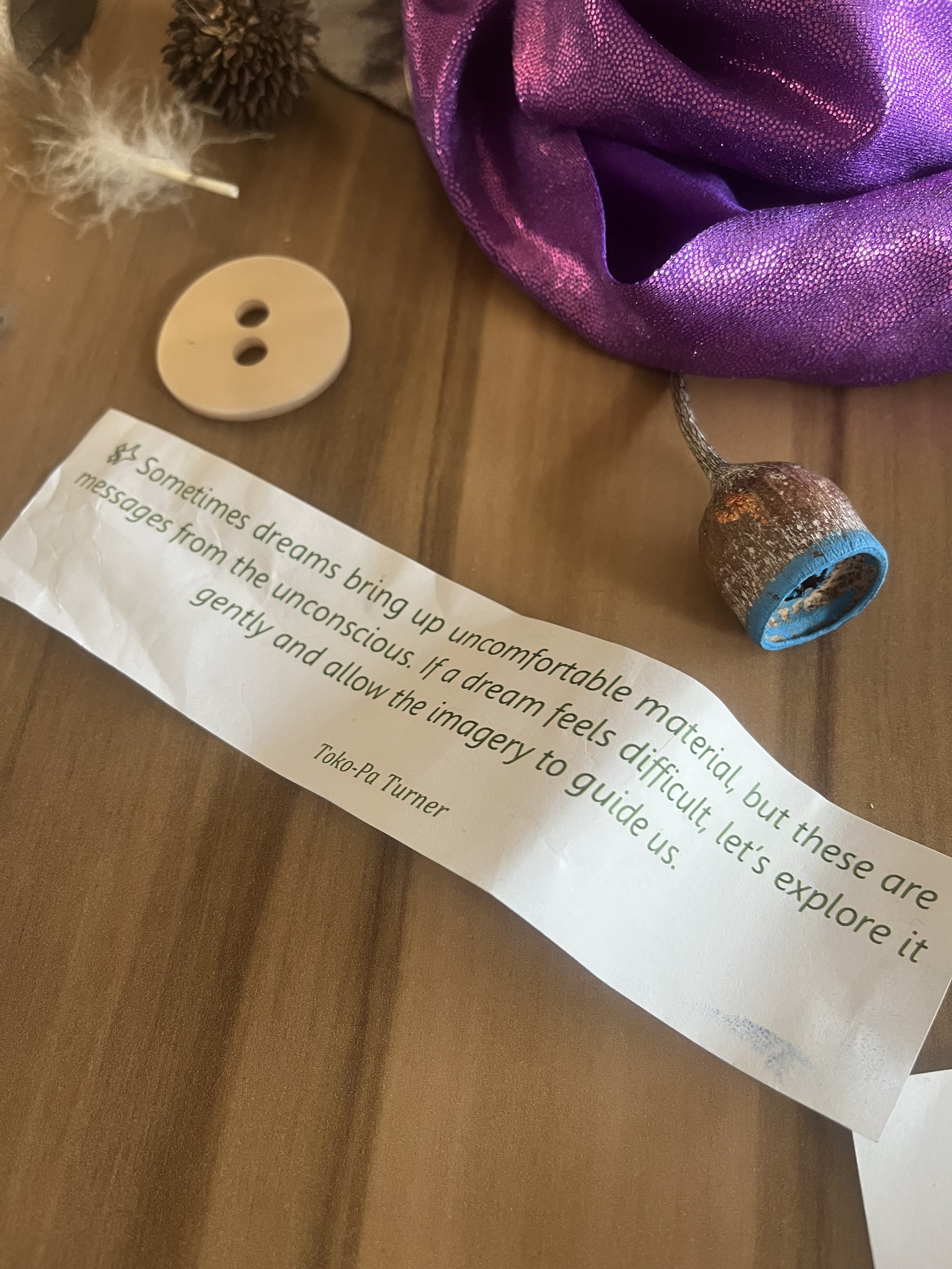
For people who have experienced trauma, dreams can be overwhelming. Some people with PTSD or CPTSD, for example, experience nightmares and night terrors. These sorts of dreams can not only illicit disturbing imagery but can also somatically bring deep emotional pain to the surface. Without the right, support, these dreams can be difficult to process and can also retraumatize the person experiencing them.
In light of this, a trauma-informed approach is essential in dreamwork that is done within clinical spaces. Research has shown that survivors of trauma can often experience sleep disturbances, including increased frequency of vivid or unsettling dreams (Van der Kolk, 2014). Without a regulated space to process them, they can re-trigger trauma responses and leave clients feeling activated in their waking hours.
When working with clients, it is therefore paramount to create a safe, supportive container for clients to engage with their dreams. When working with dreamwork within my practice, I always ensure there has been an element of relational safety established between myself and clients who have experienced trauma.
"By starting with smaller, less intense fragments of a dream before engaging with its more overwhelming aspects, clients are able to safely work through unresolved material without feeling flooded."
It is important when working with clients that we always remain trauma-informed in our dreamwork. This means we should take the process slowly (particularly with any activating content) and ensure small, manageable steps. Here, two techniques become important:
Titration: Introducing difficult material through gradual, incremental exposure, starting with small, manageable fragments rather than the whole narrative
Pendulation: Safely alternating between states of distress and calm, guiding the client back to a grounded space before returning to the dream material
In essence, we hold the therapeutic container safely, whilst allowing clients to experience the emotional charge of the dream. From here we can then guide them back to a safe, calm space before once again returning to the dream material.
As the research shows, trauma-sensitive interventions, which focus on safe engagement and gradual processing, are effective in reducing symptoms of distress (Ogden et al., 2006). This aligns with my clinical approach, where clients can gradually move through intense emotional content while remaining grounded and empowered in their healing journey.
Dreams have accompanied humanity for as long as we have slept, emerging as stories, sensations, landscapes, or weird little mysteries that resist easy explanation. While we may never fully understand their origins, when approached with curiosity they can become living experiences that invite us into dialogue with unseen parts of ourselves. The ultimate value of dreamwork is not in finding the ‘right’ interpretation, but in developing a deeper relationship with the images, emotions, and experiences that emerge from within both our bodies and psyches.

References
Ellis, L. (2023). Somatic dreamwork: A trauma-informed approach to embracing the wisdom of the body in dream exploration. Routledge (p. 2).
Holzinger, B., et al. (2021). DreamSenseMemory: A multi-sensory dream retrieval protocol for memory processing and integration. Frontiers in Psychology, 12 (p. 4).
Hoss, R. J. (2010). The neurobiology of dreaming and dreamwork applications. International Association for the Study of Dreams (p. 1).
Jung, C. G. (Ed.). (1964). Man and his symbols. Doubleday (p. 4).
Ogden, P., Minton, K., & Pain, C. (2006). Trauma and the body: A sensorimotor approach to psychotherapy. W. W. Norton & Company (p. 6).
Pesant, N., & Zadra, A. (2004). Working with dreams in therapy: What do we know and what can we do? Clinical Psychology Review, 24(5), 489–512 (p. 4).
Rogers, N. (2001). The creative connection: Expressive arts as healing. Science & Behavior Books (p. 163).
Thomas, J. (2010). Dream work in psychotherapy: Outcome indices and therapeutic depth. Journal of Counseling & Development, 88(1) (p. 3).
Van der Kolk, B. A. (2014). The body keeps the score: Brain, mind, and body in the healing of trauma. Viking (p. 6).