Practice Notes: Choosing the Right Doorway
In trauma work, the nervous system determines what is possible (or 'accessible') at any given moment, meaning which of our clients’ capacities are sufficiently online to utilise: attention and working memory, interoception, affect tolerance, symbolic and imaginal processing and relational engagement.
When I think of it like this, art always remains central, but its role flexes with the client’s capacity, e.g.
When curiosity is present → exploratory artmaking for meaning-making.
When activation is high → simple, rhythmic, sensory artmaking for regulation.
When even artmaking is too much → arts-inflected dialogue that keeps a creative ethos (embodied noticing, imaginal language, paced inquiry) ensuring materials are always within reach.
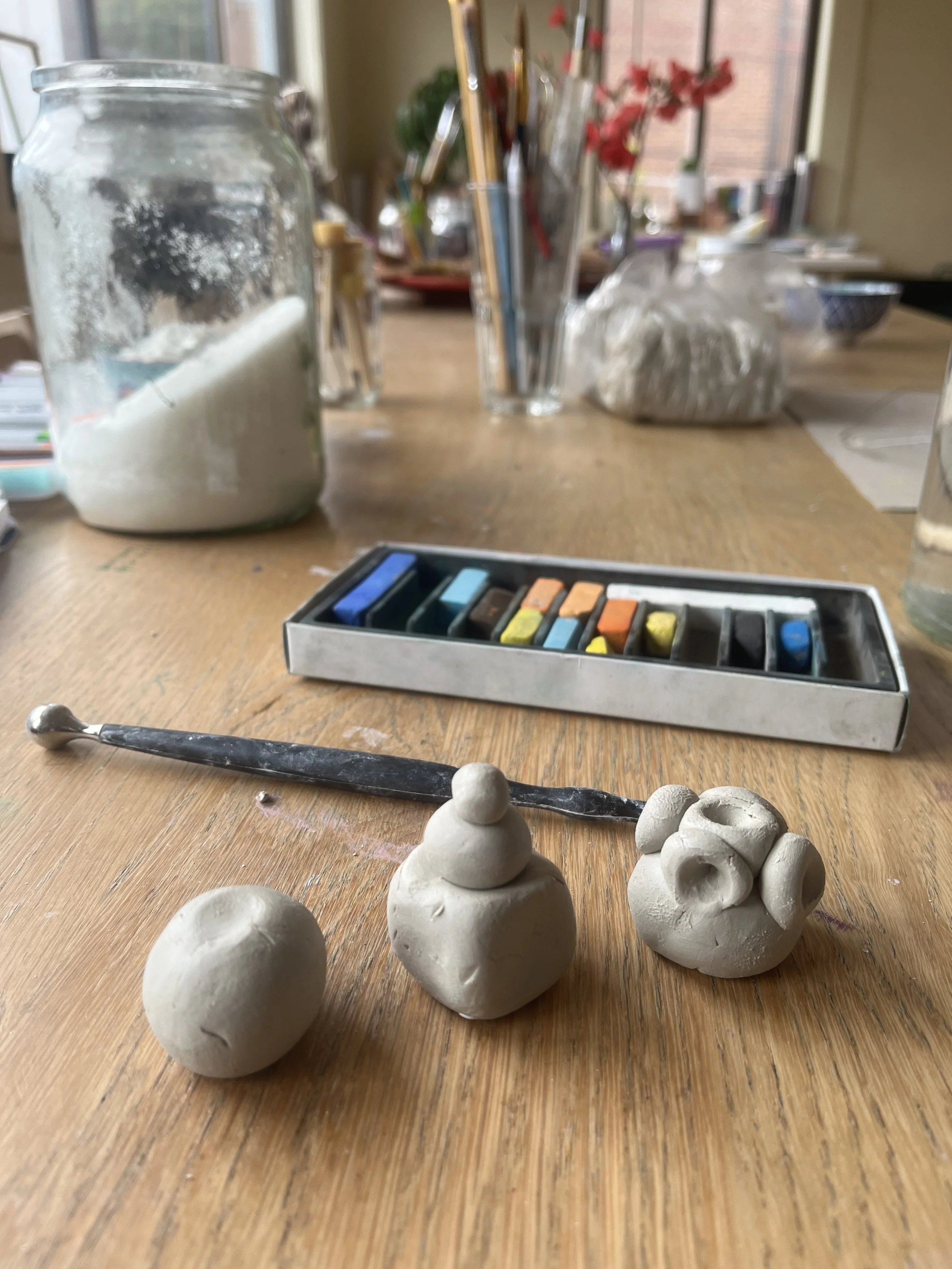
A quick vignette: during an arts therapy session recently, a client slowly rolled small clay balls while we spoke; the rhythm created enough ground to stay present with what she was saying. In that moment, art served as a regulatory tool, not an exploratory one.
My takeaway as a trauma-informed Creative Arts Therapist: attunement chooses the doorway; method follows capacity, and the creative relationship holds the container.
How do you keep art central when the doorway seems to be dialogue? And what regulatory art actions do you lean on when arousal is high?
Image: Clay creations by me, Seedpod Creative Arts Studio, 2025